Why Choose a UK Injection Moulding Company: The Case for British Manufacturing

For the past decade, offshore manufacturing was the default assumption for many UK product buyers looking for injection-moulded components. Cheaper piece-parts and larger-scale factories made China, India and Eastern Europe the obvious choice for high-volume production. That default is changing. Supply chain shocks, rising shipping costs, quality inconsistencies, longer lead times, tariff uncertainty and growing sustainability pressure have all shifted the numbers. More UK buyers are now asking a straightforward question: should we bring this back to a British injection moulding company?
This guide sets out the honest case for choosing a UK injection moulder, where offshore might still make sense, and how to evaluate a British moulder for your project. It is written for product buyers, engineers and procurement managers who want to weigh up the real trade-offs rather than the marketing spin.
Why UK manufacturing is having a moment
The reshoring trend is not a nostalgic argument. It is a commercial one. Since 2020, buyers have watched offshore lead times stretch from weeks to months, container costs spike and settle at higher levels, quality control become harder to enforce at a distance, and geopolitical events disrupt supply chains that used to be reliable. British manufacturers are also investing again, with newer machines, better automation and stronger sustainability credentials than the sector had ten years ago.
The result is that the real cost gap between UK and offshore injection moulding has narrowed significantly, and for many projects it now favours the UK once total cost of ownership is properly counted.
The real advantages of a UK injection moulding company
Shorter, more reliable lead times
Domestic production removes the biggest single source of delay in offshore manufacturing: shipping. A UK moulder can typically deliver tooling in weeks rather than months, respond to change orders in days rather than a full production cycle, and turn around urgent short runs without the customs and freight overhead. For products where speed to market matters, this is often the single biggest advantage.
Better quality control
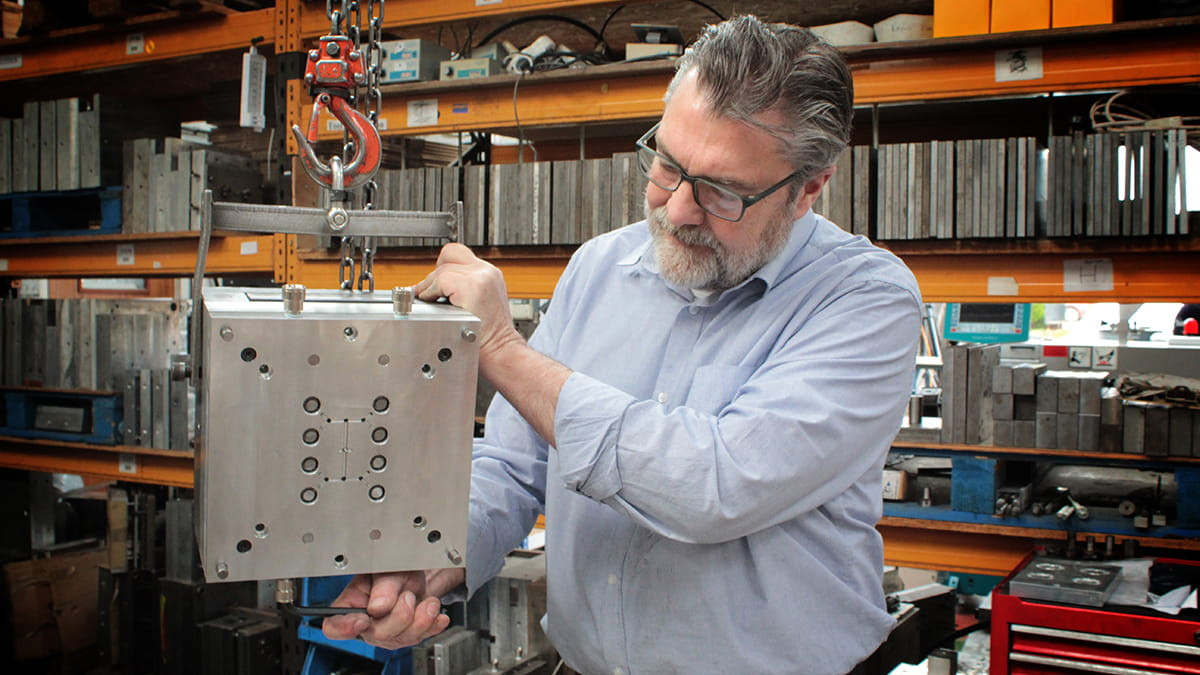
Site visits are practical. Quality reviews happen face to face. First-off samples can be inspected, approved and adjusted in a single working day rather than a two-week back-and-forth. Any moulder can send you a photograph of a component; a UK moulder can invite you to the factory to see it running on the machine.
Genuine intellectual property protection
UK legal frameworks give proper recourse if a supplier misuses your designs, tooling or production data. Physical proximity makes it far easier to control who has access to what. For products with genuine IP value, whether that is a novel design, a proprietary formula or a branded consumer good, this alone often justifies choosing a UK moulder.
Sustainability credentials that mean something
Domestic manufacturing has a materially lower carbon footprint than shipping components from Asia. Beyond that, UK moulders are increasingly investing in renewable energy, recycled materials and circular production. At Great Central Plastics, our solar panels generate around one third of our energy needs, and our in-house regrind process reuses production waste wherever possible. See our sustainable injection moulding approach for the full picture. For buyers with sustainability reporting requirements or ESG commitments, this matters.
Protection from tariff and currency volatility
Sterling billing removes currency exposure. Domestic supply removes tariff exposure. In a period where trade policy has been genuinely unpredictable, this is worth real money.
Communication that works
Time zone alignment, shared working practices, and no language barrier sound like small advantages until you try managing a complex moulding project across a nine-hour time difference. Fast, clear communication is often the difference between a project that lands on time and one that slips.
When offshore might still make sense
Being honest about this matters. Offshore moulding still has a place for certain projects. If your product is genuinely commodity, has no IP concerns, needs extremely high volumes at the lowest possible piece-part price, and is not time sensitive, offshore may still be the right answer. Similarly, if your customer base is primarily overseas and shipping from Asia to those markets is more efficient than shipping from the UK, geography can favour offshore production.
For most UK-based product companies, though, these conditions are becoming the exception rather than the rule.
What to look for in a UK injection moulding company
Not all UK moulders are the same. If you are evaluating potential partners, these are the things worth asking about:
Accreditations. ISO 9001:2015 for quality management should be a minimum. Sector-specific accreditations (IATF 16949 for automotive, ISO 13485 for medical) matter if your product falls into a regulated space.
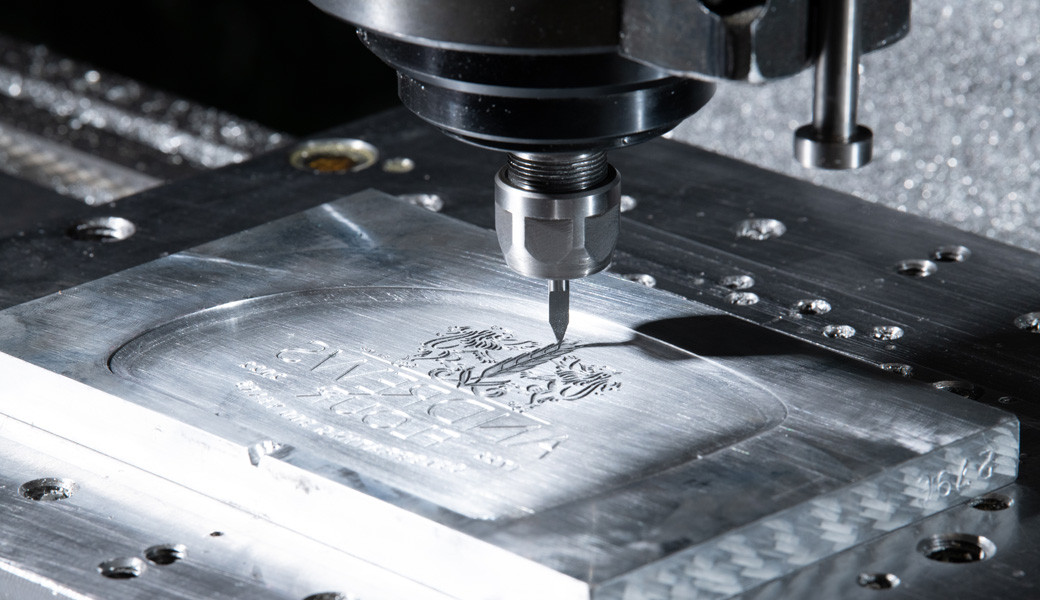
In-house capabilities. A moulder with in-house toolmaking and post-moulding services offers shorter lead times, tighter quality control and often lower total cost than one that subcontracts these stages.
Machine range. The right machine size depends on your part. A moulder with a broad range (small presses for precision components through to larger machines for bigger parts) can handle more of your product portfolio.
Minimum order quantities. Some UK moulders only quote for high volumes. If you are working on prototypes, product launches or low-volume specialist parts, look for a moulder with a genuinely low MOQ. Great Central Plastics can produce from an MOQ of 250 for suitable projects, which is unusually low for the sector.
Sustainability approach. Ask specifically what they do rather than what they claim. Solar power, regrind processes, recycled material availability and ISO 14001 accreditation are all real signals.
Track record. Named clients matter, particularly clients in your sector. A moulder who has produced for genuinely demanding brands has been tested on quality, consistency and delivery in ways a generalist supplier has not.
Great Central Plastics: British-made since 1998
Great Central Plastics has been manufacturing from our Northamptonshire facility since 1998. Over that time, we have produced injection moulded components for some of Britain's most recognisable brands, including Bentley, Toyota, BBC, Coca-Cola, Disney, Nestlé, Michelin, Triumph and Cadbury. We recently expanded into a second facility to meet growing demand.
Our capabilities span in-house toolmaking, a range of injection moulding machines from 22 to 160 tonnes, comprehensive post-moulding services including printing, foiling and chrome plating, and automotive-specialist work including chrome-plated badges. We are ISO 9001:2015 registered, PlastikCity approved, and 2025 winners of the Dennis Eagle Platinum Supplier Award.
For advice on injection moulding materials, see our complete material selection guide. For bespoke projects, see our mould shop capabilities.
Frequently asked questions
UK injection moulders offer shorter lead times, easier quality control, stronger IP protection, lower carbon footprint and no language, time zone, tariff or currency barriers. For most UK-based product buyers, once total cost of ownership is properly counted, a UK moulder is now competitive with offshore alternatives for a growing range of projects.
On piece-part price alone, offshore can still be cheaper for very high-volume commodity work. But total cost of ownership is different. When you include shipping, customs, longer lead times, quality remediation, tooling risk and IP exposure, the gap narrows significantly and often reverses. Ask any UK moulder for a total cost comparison rather than just a per-unit quote.
Typical UK lead times are several weeks for tooling and days to weeks for production runs, depending on volume and complexity. This compares with three to six months for equivalent offshore work once shipping is included. Urgent projects can often be accelerated further.
ISO 9001:2015 for quality management is a minimum. ISO 14001 for environmental management is increasingly expected. Sector-specific accreditations matter if you are in automotive (IATF 16949), medical (ISO 13485) or food-contact applications.
Some can, some cannot. Many high-volume specialists have MOQs in the thousands or tens of thousands. Look for moulders who specifically support prototype and low-volume runs. Great Central Plastics can produce from an MOQ of 250 for suitable projects.
Check accreditations, ask about in-house capabilities (toolmaking, post-moulding, finishing), look at named clients particularly in your sector, understand their machine range, and confirm MOQ suits your volumes. A site visit is almost always worth doing before committing to tooling.
Talk to us about bringing your project to a UK injection moulding company
If you are weighing up UK versus offshore for your next injection moulding project, or considering reshoring an existing product, our team is happy to talk it through honestly. We will tell you where UK production genuinely makes sense for your project, and where it does not. Get in touch for a no-obligation conversation.